
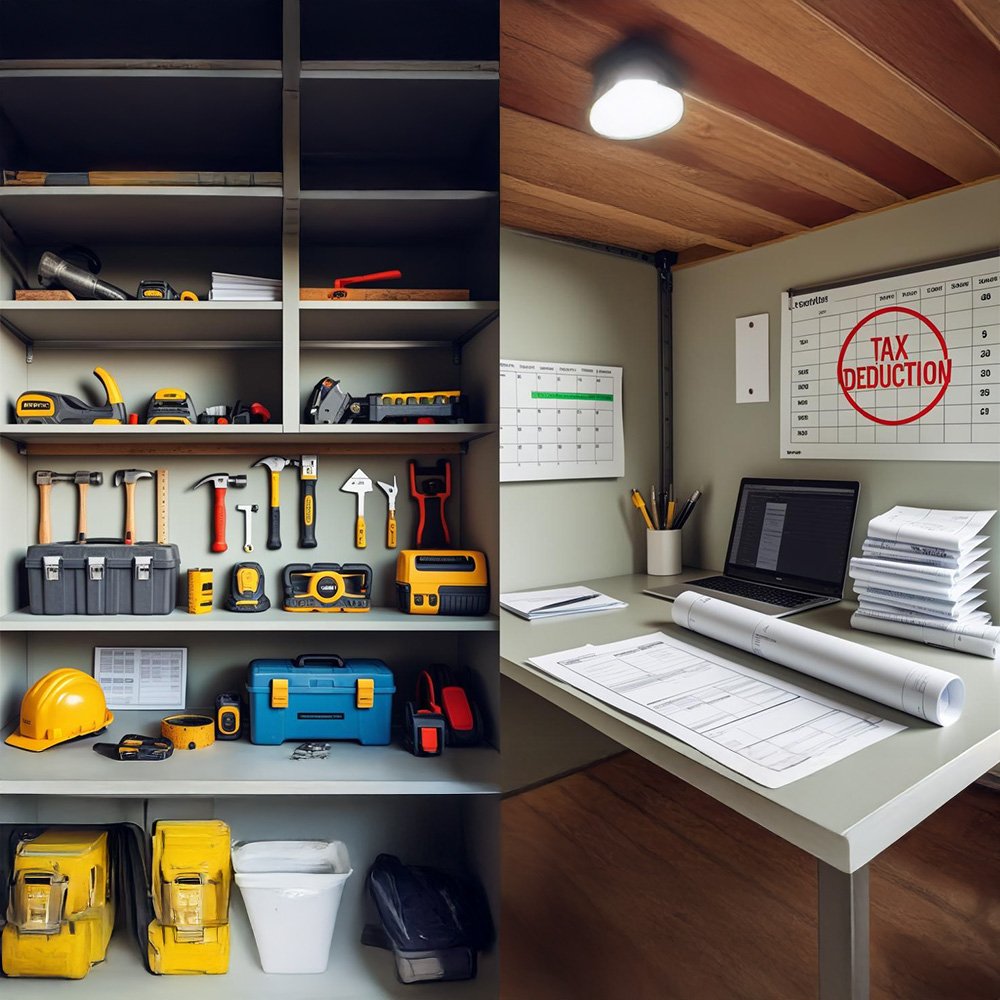
Let’s be real. Your “office” probably isn’t a cubicle.
It might be your kitchen table, your truck, or the garage bay where your tools, laptop, and stacks of blueprints live. That doesn’t disqualify you.
Good news:
The IRS doesn’t care where your office is — if you follow the rules, you can deduct it.
And those deductions can add up to serious tax savings.
Most Contractors Miss This Deduction
Too many construction business owners believe the home office deduction is only for remote workers or desk jobs.
That’s not true.
If you’re managing your business from home, whether you’re doing estimates, scheduling jobs, or invoicing clients, you may qualify.
Here are the two rules the IRS cares about:
1️⃣ You use part of your home regularly and exclusively for business
2️⃣ That space is your principal place of business or used to manage the business
Even a dedicated desk, garage workspace, or spare room can qualify if used correctly.
What You Can Deduct
Once you qualify, here’s what you can write off:
🚪 Direct Expenses (100% Deductible)
- Repairs to the home office area
- Upgrades or improvements specific to that space
- Office-only utilities (if separately metered)
🏠 Indirect Expenses (Partially Deductible)
A percentage of your total home expenses — based on the office’s square footage:
- Rent or mortgage interest
- Property taxes
- Homeowners insurance
- Utilities (electricity, water, trash)
- Security system
- General maintenance
Example:
Home size: 2,000 sq ft
Home office: 200 sq ft
→ You can deduct 10% of your eligible household expenses.
What About the Garage?
Yes — your garage may qualify, if used exclusively for business.
Many contractors use garage space to:
- Store tools and inventory
- Handle small repairs
- Plan out jobs
- Organize paperwork or run admin tasks
As long as it’s regular and exclusive business use — and not shared with fishing gear or bikes — it can qualify for the home office deduction.
Want to Keep It Simple?
The IRS offers a simplified home office deduction:
- Flat rate of $5 per square foot (max 300 sq ft)
- No need to calculate actual expenses
- No receipts for utilities, rent, etc.
This method is easier, but the regular method often gives you a larger deduction if you have high home expenses.
How to Stay Compliant (and Audit-Ready)
Home office deductions are powerful but they come with scrutiny.
To avoid issues, keep proper records:
✅ Clear photos of your home office or garage setup
✅ Floor plans showing business-use square footage
✅ Receipts for office-specific repairs
✅ Utility and mortgage/rent bills
✅ Insurance documentation
✅ Notes on how the space is used for business
Clean documentation keeps you compliant and confident.
The Cost of Doing Nothing
At Blu Hat Bookkeeping, we’ve helped countless contractors recover missed deductions.
Common (and costly) mistakes we see:
❌ Assuming you don’t qualify
❌ Avoiding the deduction out of fear of an audit
❌ Failing to track garage or shared-space usage
❌ Not keeping proper records
The result? Contractors end up overpaying thousands in taxes — year after year.
How Blu Hat Bookkeeping Helps
We specialize in helping construction business owners:
- Properly claim home office & garage deductions
- Set up clear, IRS-compliant records
- Maximize every legal write-off
- Avoid the common audit triggers
You focus on building the business.
We’ll build the books that protect your bottom line.
Ready to Save on Taxes the Right Way?
👉 Schedule a free consultation with Blu Hat Bookkeeping
👉 Let’s review your workspace setup and tax strategy
👉 Start keeping more of your hard-earned money
Final Word:
It doesn’t matter where you run your business from.
What matters is how well you document it.
And that’s where we’ve got your back.